How to Safely Hang Things on Drywall — and Repair Minor Dama
Drywall is one of the most common wall materials in homes, but it can also be one of the most delicate when it comes to hanging items or repairing damage. Whether you’re decorating a new space or prepping for a paint refresh, learning how to handle drywall properly will help you avoid cracks, holes, and uneven finishes.
1. Know What You’re Hanging and How Heavy It Is
Before picking up a hammer or drill, assess the weight of what you plan to hang.
- Light items (under 5 lbs) — small picture frames or lightweight décor — can usually be supported with adhesive hooks or small picture nails.
- Medium items (5–20 lbs) — larger frames, clocks, or shelves — should use drywall anchors for a secure hold.
- Heavy items (20 lbs or more) — mirrors, large shelves, or TVs — must be secured into wall studs or supported by toggle bolts.
👉 Safety Tip: Use a stud finder to locate framing behind the drywall. Hanging directly on drywall alone is not secure for heavy loads.
2. Choose the Right Hardware
Using the correct hanging hardware prevents unnecessary wall damage.
- Plastic expansion anchors: Good for medium-weight objects. Drill a small pilot hole, tap the anchor in, and screw into it.
- Molly bolts: Expand behind the drywall for a stronger grip—great for medium to heavy items.
- Toggle bolts: Use for the heaviest loads; the wings open behind the wall to distribute weight.
- Adhesive hooks: Best for renters or temporary hanging, but only for very light décor.
3. Repairing Minor Drywall Damage
Even small nail holes or dents can show through paint. Before painting, take a few minutes to patch and smooth your drywall.
For nail or screw holes:
- Clean away dust and debris.
- Apply lightweight spackle with a putty knife.
- Let it dry completely (usually 1–2 hours).
- Sand lightly with fine-grit sandpaper.
- Wipe the area clean with a damp cloth.
For small dents or chips:
- Use joint compound instead of spackle for slightly larger damage. Apply in thin layers and sand smooth once dry.
4. Repairing Moderate Drywall Damage
If you have holes up to 4 inches wide (like from a doorknob or anchor tear-out), use a patch kit:
- Clean and cut away any loose drywall.
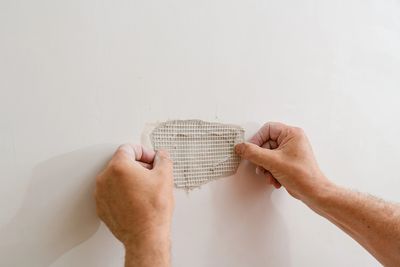
- Apply a self-adhesive mesh patch over the hole.
- Spread joint compound evenly over the patch with a 6-inch drywall knife.
- Let it dry, then sand smooth.
- Apply a second thin coat if needed for a seamless finish.
For larger holes, a replacement drywall piece may be needed. Cut a square patch to fit, secure it with drywall tape and joint compound, and sand smooth after drying.
5. Prime Before You Paint
Once the surface is smooth, apply a stain-blocking primer to ensure paint adheres evenly and doesn’t reveal patched spots. This step prevents dull or uneven areas on your finished wall.
6. Key Takeaways for Homeowners
- Always check wall studs before hanging heavy objects.
- Choose the right anchors and hardware for weight and wall type.
- Patch holes and dents before painting for a flawless finish.
- Prime your repairs before applying the final coat of paint.
Final Thoughts
Taking time to hang things properly and fix drywall damage protects your walls and enhances your home’s appearance. With the right tools, materials, and techniques, you’ll achieve a clean, professional-looking result — even as a DIY beginner.